Grand Journal of Urology
E-ISSN : 2757-7163

Current Issue
Editorial
Editorial, Online First: 30 November -0001

Dear colleagues, I am honored to share with you the second issue of 2025 (volume 6, issue 2) of the Grand Journal of Urology (Grand J Urol) with the contributions of many respected researchers and authors. Grand Journal of Urology (GJU) aims to carry written and visualscientific urology studies to academic platforms and to make significant contributions to the science of urology. Our journal has been abstracted/indexed in Tubitak Ulakbim TR Index, EBSCOhost, J-Gate, SciLit, ResearchGate and Google Scholar international databases. As of these achievements, the Grand Journal of Urology (GJU) has taken its place among the journals indexed by national and international databases. In this issue of our journal, there are many valuable articles under the subheadings of Andrology, Endourology, General Urology, Reconstructive Urology, Urolithiasis and Urologic Oncology. I hope that these carefully prepared articles will make important contributions to valuable readers, researchers and the urology literature. On this occasion, I would like to express my heartfelt gratitude to our authors who have contributed to our journal with their articles, to our reviewers who have meticulously evaluate the articles. Respectfully yours May 2026 Assoc. Prof. Ekrem GUNER, MD Editor-in-Chief
Original Article
Andrology (Male Sexual Disfunction, Infertility), Online First: 10 February 2026
Grand J Urol 2026;6(2):053-059, DOI: 10.5505/GJU.2026.47550
Objective: To investigate the diagnostic, therapeutic, and clinical attitudes of urology residents and specialists in Türkiye toward hematospermia. Materials and Methods: A cross-sectional electronic survey was conducted between July 17 and August 17, 2025, among urology specialist and residents actively practicing in Türkiye. The questionnaire assessed participants" demographic characteristics, frequency of hematospermia (HS) cases, diagnostic and treatment preferences, and perceptions regarding the condition"s psychosocial impact. Descriptive statistics were used, and group comparisons were performed using Pearson"s chi-square or Fisher"s exact test. Results: A total of 101 urologists (56 specialists and 45 residents) participated. While 57.4% had managed over 10 HS cases, 68.3% reported most patients were between 30–50 years old. Physical examination was routinely performed by over half of both groups. Residents were more likely than specialists to order urine cultures (86.7% vs. 57.1%, p=0.003). Recurrent HS and urinary symptoms were common triggers for further diagnostic evaluation. Quinolones were the most preferred antibiotics, significantly more so among specialists (81.8% vs. 40.0%, p
General Urology, Online First: 10 February 2026
Grand J Urol 2026;6(2):060-067, DOI: 10.5505/GJU.2026.35682
Objective: This study aimed to systematically evaluate the content, quality, and reliability of kidney cyst-related videos on YouTube, using expert assessments and validated scoring tools. Materials and Methods: A YouTube search was performed on August 1, 2024, using the keywords "kidney cysts" and "renal cysts." The first 200 videos sorted by relevance were screened, and 147 eligible videos were included. Two independent urologists evaluated the videos using three validated tools: the Global Quality Scale (GQS), the modified DISCERN tool, and the Journal of the American Medical Association (JAMA) benchmark criteria. Videos were categorized by content type and source of upload. Descriptive statistics were reported, and appropriate tests were used to assess associations between video characteristics and quality scores. Results: Of the 147 videos analyzed, 71.4% were uploaded by professional sources, and "symptoms and diagnostic methods" was the most common content type. The median scores were 3 for GQS, 2 for modified DISCERN, and 2 for JAMA. According to the modified DISCERN tool, 57.2% of the videos were classified as poor quality, 33.3% as moderate, and only 9.5% as good quality. Videos from professional sources had significantly higher quality scores across all three systems. Longer videos and those with higher numbers of likes and comments tended to score better. A strong correlation was observed among the three scoring systems. Conclusion: Despite many videos being produced by professional sources, the overall quality and reliability of YouTube content on kidney cysts remain limited. Given YouTube's widespread use for health information, healthcare professionals should guide patients toward trustworthy resources. Future studies should focus on interventions to improve the accuracy and educational value of YouTube content.
Urologic Oncology, Online First: 17 April 2026
Grand J Urol 2026;6(2):068-074, DOI: 10.5505/GJU.2026.04934
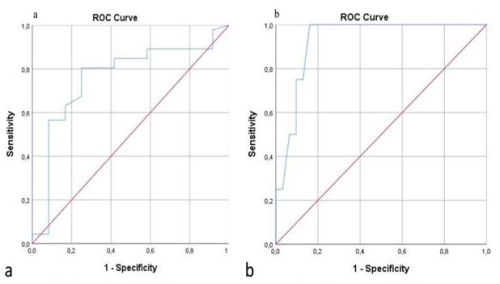
Objective: This study aimed to investigate the relationship between contrast enhancement on computed tomography (CT) urography and tumor grade, recurrence, and muscle invasion in patients who underwent CT urography for hematuria and were found to have bladder tumors. Materials and Methods: A total of 70 patients diagnosed with bladder cancer between February 2022 and February 2023 were prospectively included in the study. Preoperative CT urography was performed in all patients. Hounsfield unit (HU) measurements were obtained from the tumor in both non-contrast and nephrographic phases. The difference between these values was defined as the contrast enhancement level. The association between contrast enhancement and tumor grade, recurrence, and muscle invasion was statistically analyzed. Results: High-grade bladder tumors were identified in 46 patients, while 24 had low-grade tumors. The contrast enhancement values were significantly higher in high-grade tumors compared to low-grade tumors (28.9 ± 11.8 HU vs. 17 ± 10.3 HU, p
Andrology (Male Sexual Disfunction, Infertility), Online First: 27 April 2026
Grand J Urol 2026;6(2):075-082, DOI: 10.5505/GJU.2026.37029
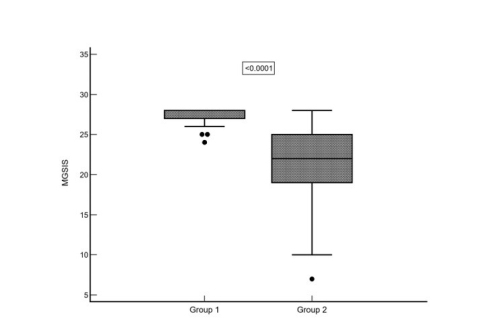
Objective: The optimal timing of circumcision during childhood and the preferred method of anesthesia remain subjects of ongoing debate. This study aimed to investigate the long-term potential effects of local versus general anesthesia administered during circumcision performed in the phallic stage on adult male genital self-image scores. Materials and Methods: A total of 84 male individuals who had undergone circumcision during the phallic stage were included in the study. Participants were divided into two groups based on the anesthesia type administered during the procedure: Group 1 received general anesthesia, while Group 2 received local anesthesia. Sociodemographic characteristics, including age, marital status, and educational background, were recorded. Additionally, body mass index (BMI), age at circumcision, indications for the procedure, and post-circumcision complications were analyzed. Each participant was assessed using the Beck Depression Inventory (BDI), the International Index of Erectile Function (IIEF-15), and the Male Genital Self-Image Scale (MGSIS-7). Results: The mean age of participants did not differ significantly between groups (p> 0.05). Similarly, there were no significant intergroup differences in terms of circumcision age, BMI, indication for the procedure, or complication rates (p> 0.05). Moreover, IIEF-15 and BDI scores also showed no statistical differences between the two groups (p> 0.05). However, the mean MGSIS-7 score was significantly lower in the local anesthesia group compared to the general anesthesia group (p
Reconstructive Urology, Online First: 07 May 2026
Grand J Urol 2026;6(2):083-086, DOI: 10.5505/GJU.2026.74508
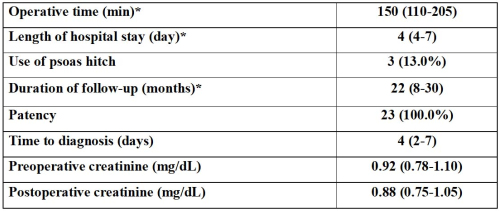
Objective: To evaluate the surgical outcomes of iatrogenic distal ureteral injury repair using the modified Lich–Gregoir ureteroneocystostomy technique, focusing on perioperative parameters, complications, and long-term functional results. Materials and Methods: In this retrospective analysis, 23 patients who experienced iatrogenic distal ureteral injuries underwent repair using the modified Lich–Gregoir technique from January 2021 to January 2025. The preoperative evaluation included tests such as serum creatinine, urinalysis, renal ultrasound, and cross-sectional imaging, with selective use of retrograde pyelography or renal scintigraphy. Surgical outcomes were measured by examining ureteral patency, renal function, operative details, and complications, which were categorized using the Clavien–Dindo classification. Patient-reported outcomes were assessed through the Patient Global Impression of Change (PGI-C) scale. Results: The study included 11 men and 12 women, with a median age of 44 years. Gynecological surgery was the leading cause of injury, accounting for 52.2%, followed by urological surgery at 39.1%, and colorectal surgery at 8.7%. The median duration of surgery was 150 minutes, and patients typically stayed in the hospital for 4 days. A psoas hitch procedure was conducted in 3 patients, representing 13.0% of the group. The median follow-up period was 22 months. All patients (100%) experienced successful surgical outcomes. Complications were noted in two patients, with each experiencing a urinary tract infection and a wound infection, both at a rate of 4.3%. Based on PGI-C scores, 95.7% of patients felt "very much improved," while 4.3% reported being "much improved." Conclusion: The Lich–Gregoir ureteroneocystostomy, when modified, offers a reliable, safe, and effective surgical solution for treating injuries to the distal ureter caused by medical procedures.
Andrology (Male Sexual Disfunction, Infertility), Online First: 11 May 2026
Grand J Urol 2026;6(2):087-093, DOI: 10.5505/GJU.2026.93685
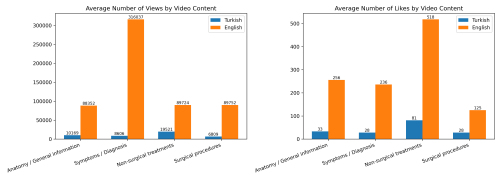
Objective: This study aimed to comparatively evaluate Turkish and English YouTube videos related to Peyronie"s disease in terms of content, quality, and reliability. Materials and Methods: In this observational cross-sectional study, YouTube searches were conducted between January 1 and 15, 2026, using Turkish ("Peyronie hastalığı", "penis eğriliği") and English ("Peyronie"s disease", "penile curvature") keywords. After applying inclusion and exclusion criteria, a total of 351 videos (143 Turkish, 208 English) were included. Videos were analyzed according to source of upload, content theme, and engagement metrics. Video quality and reliability were assessed using the JAMA Benchmark Criteria, Modified DISCERN, and Global Quality Score (GQS). Statistical analyses were performed using SPSS version 26.0. Results: English videos had significantly longer durations and higher view and like counts compared to Turkish videos (all p
Case Report
Endourology, Online First: 20 April 2026
Grand J Urol 2026;6(2):094-097, DOI: 10.5505/GJU.2026.03371
Ureteroceles are congenital cystic dilatations of the distal ureter, usually diagnosed in childhood. Symptomatic cases in adults are rare, and giant intravesical ureteroceles with intermittent urethral prolapse are exceptionally uncommon. Optimal management in adults is debated, particularly in balancing symptom relief against the risk of postoperative vesicoureteral reflux. A 48-year-old woman presented with a giant (6.8 cm) right-sided orthotopic intravesical ureterocele causing intermittent urethral prolapse and obstructive lower urinary tract symptoms. Because renal function was preserved and complaints were limited, conservative management was initially chosen. Progression to significant functional impairment led to endoscopic transurethral resection (deroofing). Recovery was uncomplicated, with complete symptom resolution and no hydronephrosis or signs suggestive of reflux on follow-up imaging. Endoscopic treatment of a giant prolapsed intravesical ureterocele in adults can be safe and effective after careful selection and requires long-term follow-up to monitor for reflux.
Clinical Image
General Urology, Online First: 12 February 2026
Grand J Urol 2026;6(2):098-099, DOI: 10.5505/GJU.2026.59389
A 78-year-old male patient presented to our hospital with a slowly enlarging, painless right inguinal mass that had been present for 15 years. On physical examination, a non-tender right scrotal mass was palpable. Computed tomography revealed a 12-cm encapsulated cystic lesion containing a calculus (Figure 1). Blood tests showed a mildly elevated C-reactive protein (CRP) level of 0.74 mg/dL (reference range: < 0.14 mg/dL). Based on these findings, a diagnosis of right scrotal hydrocele was made, and the patient underwent right orchiectomy with hydrocelectomy. Intraoperative findings indicated that the mass was located in the scrotum and extended toward the external inguinal ring. Orchiectomy was selected because the hydrocele was firmly adherent to the testis, with chronic inflammation and fibrosis, making safe separation technically unfeasible. The resected specimen contained turbid fluid, a calculus, and a markedly thickened, inflamed, and partially necrotic cyst wall (Figure 2). Histopathological examination revealed diffuse thickening of the tunica vaginalis with dense lymphoplasmacytic infiltration and characteristic storiform fibrosis (Figure 3A). The testis itself was markedly atrophic, and the seminiferous tubules showed diffuse atrophy with thickened basement membranes and hyalinization. The hydrocele was not located within the testicular parenchyma. Immunohistochemical staining demonstrated 27-48 Immunoglobulin G4 (IgG4)-positive plasma cells per high-power field (HPF) and an IgG4-positive/IgG-positive plasma cell ratio of 25-55% (Figure 3B). Given the patient's long-standing, slowly enlarging inguinal mass without prior hospital visits, and the marked chronic inflammatory changes observed intraoperatively and pathologically, the exact origin and progression from the inguinal area cannot be determined. Figure 1. Computed tomography image. Computed tomography scan showing a 12-cm encapsulated cystic lesion with a calcified nodule in the right inguinal region Figure 2. Gross appearance of the resected specimen showing a thickened, inflamed, and focally necrotic cyst wall Figure 3. A- Histopathological examination revealing lymphoplasmacytic infiltration and storiform fibrosis (H&E ×100), B- Immunohistochemical stain highlighting numerous IgG4 positive plasma cells (×400) Serum IgG4 was within normal limits, and no involvement of other organs was observed. According to the 2019 American College of Rheumatology/European League Against Rheumatism (ACR/EULAR) classification criteria for IgG4- related disease [], a diagnosis of IgG4-related disease (IgG4- RD) was established. The postoperative course was uneventful, and the patient remains well on follow-up. IgG4-RD is a recently recognized, immune-mediated fibroinflammatory disorder characterized by tissue infiltration with IgG4-positive plasma cells, lymphoplasmacytic inflammation, storiform fibrosis, and frequently obliterative phlebitis []. It can involve multiple organs, most commonly the pancreas, salivary glands, and lacrimal glands, resulting in clinical entities such as autoimmune pancreatitis, sialadenitis, and dacryoadenitis. Corticosteroid therapy is considered the first-line treatment, although no randomized controlled trials have been conducted to date. In the present case, systemic therapy was not initiated because serum IgG4 was normal and there was no evidence of extra-scrotal disease. Reports of IgG4-RD involving the male reproductive system are rare, with only a few testicular cases described in the literature. To our knowledge, presentation as chronic scrotal hydrocele represents an exceptionally uncommon manifestation. This case underscores the importance of considering IgG4-RD in the differential diagnosis of long-standing scrotal masses, particularly when histological features are suggestive. Increased awareness of this entity may facilitate accurate diagnosis, appropriate management, and a deeper understanding of its diverse clinical spectrum. Ethics Committee Approval: N/A Informed Consent: An informed consent was obtained from the patient. Publication: The results of the study were not published in full or in part in form of abstracts. Peer-review: Externally peer-reviewed. Conflict of Interest: The authors declare that they have no conflicts of interest. Financial Disclosure: The authors declare that this study received no financial support.